Loading...
Serving Brookline, MA and surrounding areas. (857) 340-2193
Serving Brookline, MA and surrounding areas. (857) 340-2193
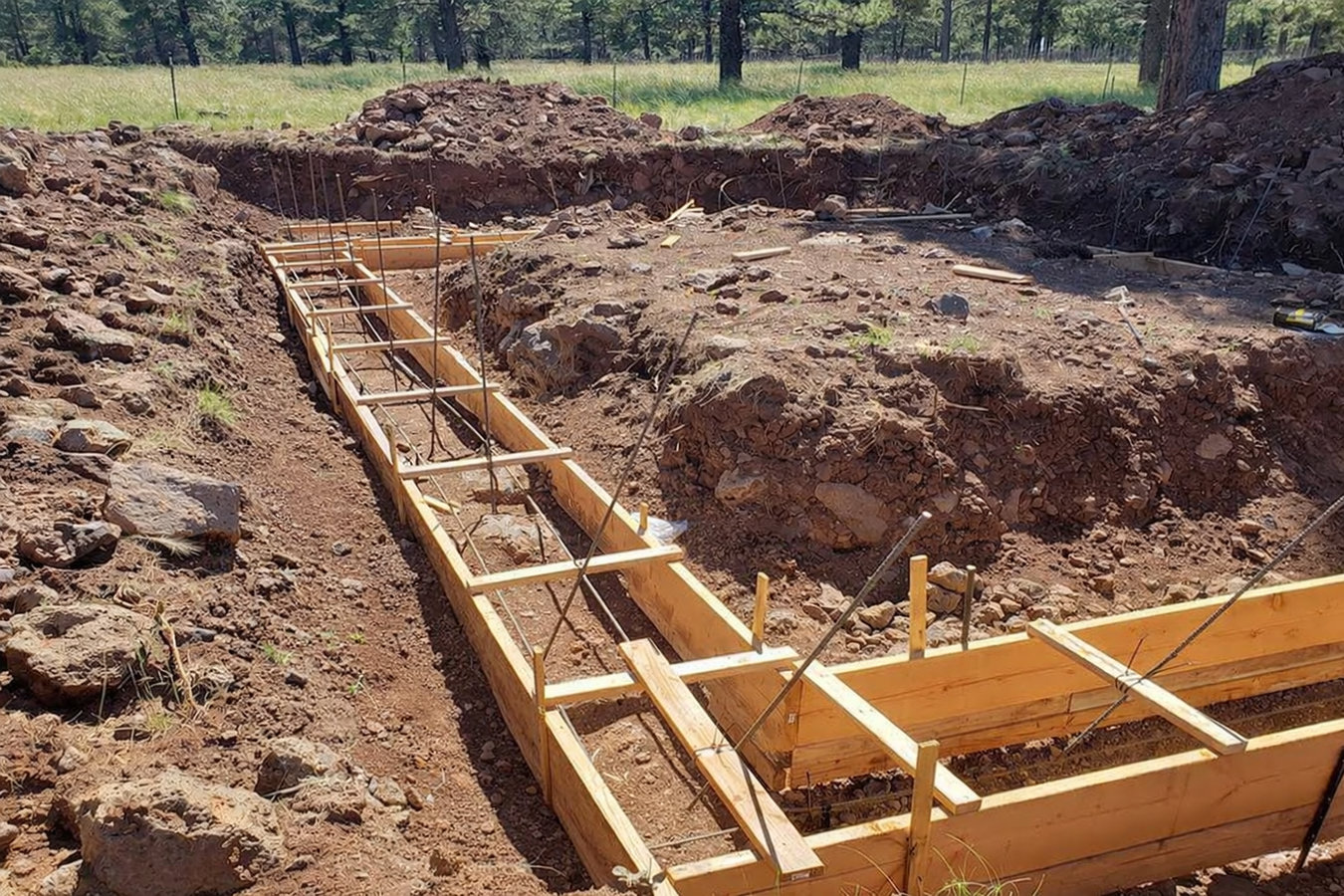
Shallow footings shift, tilt, and pull structures apart through Brookline winters. We pour footings to the full 48-inch frost depth required by Massachusetts code, with permits and inspections handled from start to finish.
Concrete footings in Brookline are poured-concrete pads buried at least 48 inches below grade to spread structural loads across stable soil and keep the ground's annual freeze-thaw cycle from moving the structure above — most residential footing projects take one to two days of active work, followed by a permit inspection before building can continue.
A footing is the buried base that everything else rests on. Without one sized and positioned correctly, a deck tilts, a porch pulls away from the house, a garage sinks. In Brookline's climate, the difference between a footing that lasts and one that fails comes down to depth — and four feet is not optional here, it is required. We handle footing work for new construction, additions, deck replacements, and repairs to structures where the original footings were not built to current standards.
Footing work is often the first step in a larger project. If you are also planning a foundation for the structure above, see our foundation installation service for how we handle full foundation pours that follow the footing stage.
If a deck post is leaning, a porch floor is sloping, or a gap is opening up between your porch and the house wall, the footings underneath may have shifted or settled. In Brookline's climate, this often happens when original footings were not buried deep enough to survive decades of freeze-thaw cycles. Address it before the movement worsens.
Stair-step cracks in brick or block, or horizontal cracks in a foundation wall, can indicate the footing beneath is moving or failing. Not every crack is a crisis, but cracks that are growing or appear after a wet winter deserve a professional look. Brookline's older homes are especially prone to this because many were built when footing standards were less rigorous.
Any new structure that attaches to your home or sits on its own needs proper footings before it can be built. If you are in the planning stage for any of these projects, footing work is one of the first things that needs to happen. Starting without them is not an option if you want a permit and a structure that lasts.
If a home inspector noted settlement, inadequate footing depth, or foundation movement, that is a direct signal that footing work may be needed. Inspectors in the Brookline market see this regularly in pre-war homes. Get a concrete contractor's assessment before deciding how to proceed — the answer is often less involved than you fear.
We pour footings for decks, porches, additions, garages, outbuildings, and any other structure that needs a stable base. Every footing project starts with a site visit where we assess access, soil conditions, and the depth and size requirements for your specific load. We submit the permit application to Brookline's Inspectional Services Department and coordinate the required inspection before building on top of the footings proceeds.
For projects that involve a full foundation above the footings, we sequence the work so the footing inspection is complete before the foundation pour begins. If you are also planning foundation installation as part of the same project, we coordinate both phases under one permit and one schedule. For properties where the ground conditions are complex — rocky soil, high water table, or soft fill — we assess and discuss those conditions before quoting a final number.
All footings include steel reinforcing bars inside the concrete. Rebar is what gives a footing the tensile strength to resist soil movement — a footing poured without it in a load-bearing application is a red flag no matter how the surface looks. You can ask to see the rebar in place before the pour. The American Concrete Institute provides published guidance on reinforcement standards for structural concrete that informs how we design every footing. If your project is part of a larger structural scope that includes a slab foundation, we tie both phases together from the start.
Suited for homeowners adding a new deck or replacing a porch where existing footings have shifted or were never up to code depth.
Suited for any attached or detached structure requiring a full footing system before a foundation or slab can be poured on top.
Suited for older Brookline homes where existing footings are undersized, cracked, or no longer adequate for a planned structural change above.
Suited for projects that cannot wait for warm weather, using insulating blankets and appropriate concrete mixes to protect curing in low temperatures.
Brookline's frost depth requirement — 48 inches — is among the deepest applicable in greater Boston, and it exists for good reason. The ground here freezes and thaws repeatedly every winter, and a footing that sits above the frost line is subject to frost heave: the soil expands when it freezes and pushes upward against anything embedded in it. Over years, that movement cracks walls, tilts posts, and pulls structures off their foundations. We never negotiate on depth.
Brookline's housing stock adds another layer of complexity. A large share of homes in this town were built before 1940, when footing standards were less rigorous than they are today. Many original footings in neighborhoods like Coolidge Corner and Washington Square are shallower and narrower than what would be required for the same project today. When we work on an older Brookline home — whether adding a new structure or assessing what is already there — we treat every site as its own puzzle, not a standard installation. The glacially deposited soils common across this area can also vary dramatically within a single lot, from firm gravel to soft clay to unexpected boulders.
We pour footings throughout Brookline and the surrounding metro area, including Cambridge, Somerville, and Newton. If your property is just outside Brookline, call us — we almost certainly cover your area.
We schedule a free site visit — not a phone quote — to assess access, soil conditions, and what the project requires. This visit is usually 30 to 60 minutes. We reply within one business day of your first contact to schedule it.
We submit the permit application to Brookline's Inspectional Services Department. Approval typically takes a few days to a couple of weeks depending on workload. You do not need to appear at the building department — we handle it. Ask for a copy of the permit for your records when it is issued.
We dig to the required 48-inch depth, set wooden forms, place rebar inside the forms, and pour the concrete. This typically takes one day for a small project. A Brookline building inspector will visit to check depth and setup — this is a normal part of every permitted project, not a concern.
After the concrete hardens — usually several days — forms are removed and the area is backfilled. The concrete continues gaining strength for up to 28 days. We tell you exactly when it is safe to begin building on top of the footings so you can plan the next phase of your project with a firm date.
We visit your site before quoting — no surprises once digging starts.
(857) 340-2193Massachusetts requires footings to be buried at least four feet below grade in this part of the state. We do not cut corners on depth — not to save time, not to reduce cost. A footing that falls short by even a few inches is a footing that will fail in this climate.
We manage the permit application to Brookline's Inspectional Services Department and coordinate the required inspection. You receive a clean permit record — critical if you ever sell the home and a buyer's attorney checks for unpermitted structural work.
Most homes in Brookline were built before 1940 — many with footings that predate modern depth requirements. We assess what is already there before quoting any project that touches an existing structure. That honesty saves homeowners from discovering hidden problems mid-project.
We hold a current Massachusetts Construction Supervisor License and carry full liability and workers' compensation insurance. You can verify our license status through the state's public lookup before signing a contract.
Every project we take on in Brookline benefits from the same combination: the right depth, proper permitting, and honest assessment of what existing conditions require. That approach is why our footing work stays solid through winters that expose every shortcut a contractor might take.
When footings alone are not enough, foundation raising addresses the structural lift needed to correct settled or damaged foundations.
Learn moreFull foundation pours that follow the footing stage, including wall forms, reinforcement, and waterproofing for new construction.
Learn morePermit timelines in Brookline mean every week you wait is a week the project gets pushed back — reach out now and we will get the process moving.